ISSW is the International Snow Science Workshop
ISSW 2026 webpage September 28-October 2 in Whistler, British Columbia
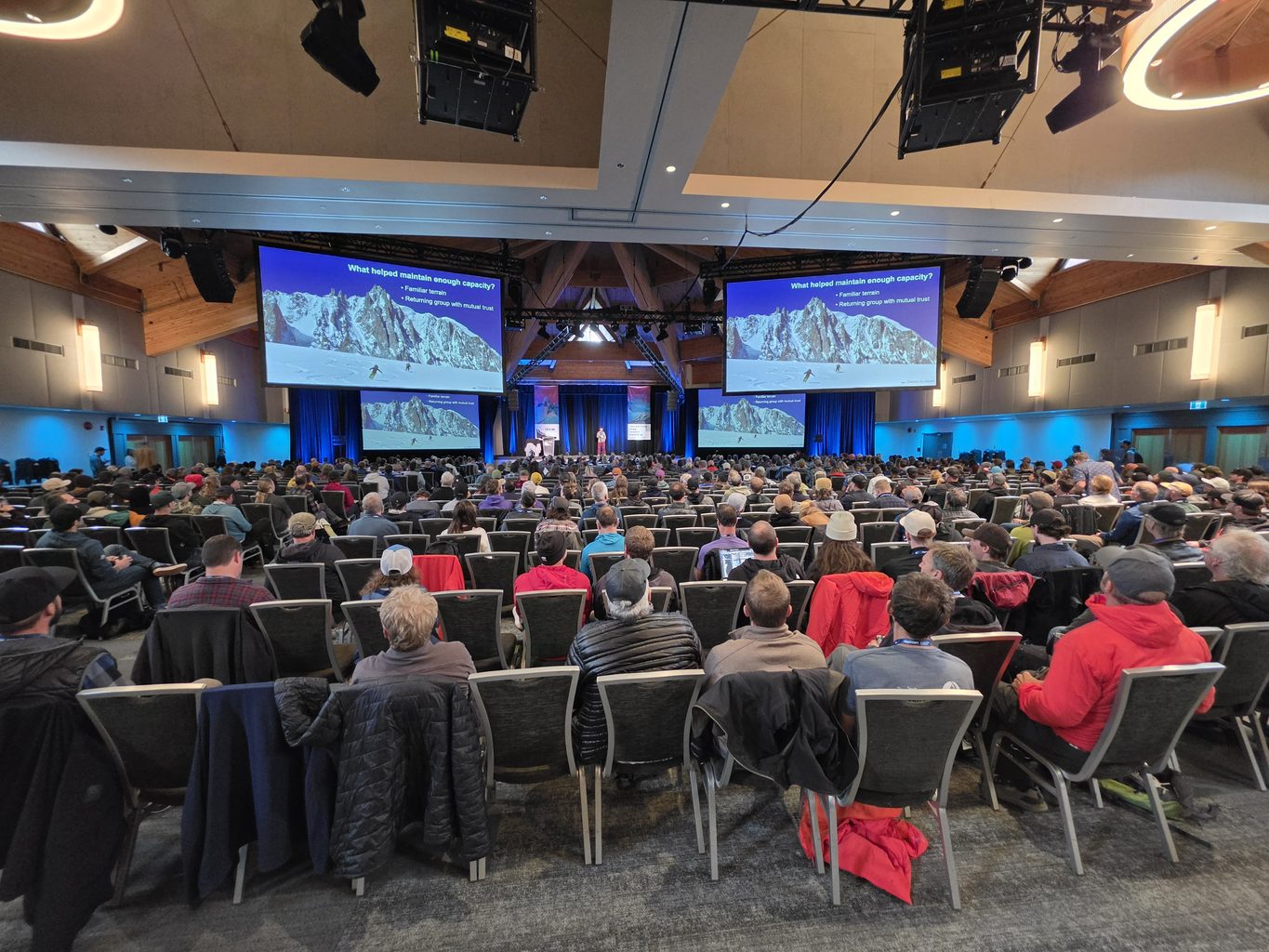
Almost 1400 people attended the International Snow Science Workshop in Whistler, BC. As you may see from the chart below each day was broken into four sessions of about one-and-a-half hours each. The fourth daily session was broken into a choice of a presentations or a panel discussion.
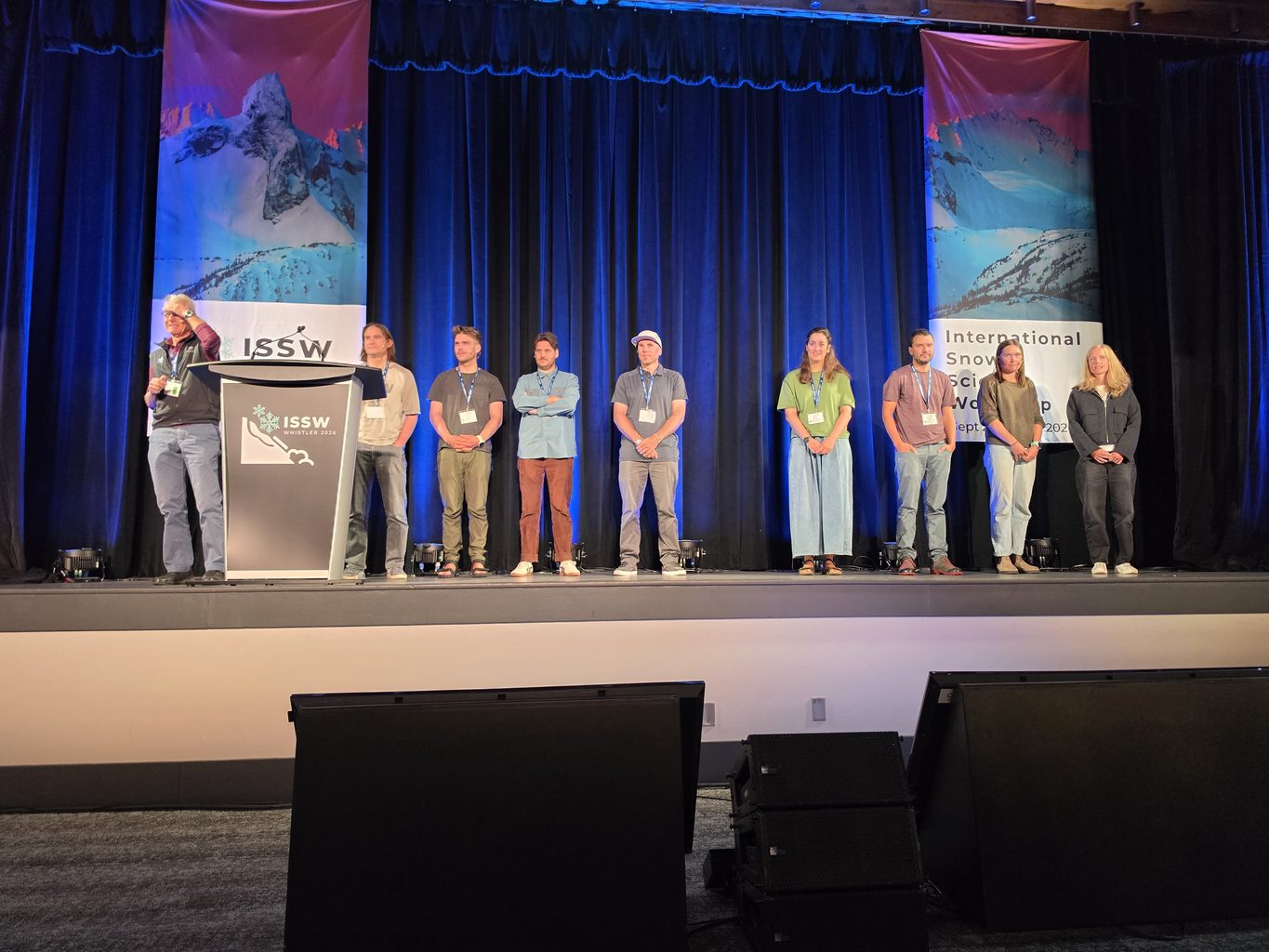
Each session had seven presenters. Each presenter had eight minutes to present. This photo above shows all the presenters for a session gathered together at the end for questions and answers. (You may wonder why you see more than seven people. One is the session host [shading his eyes] and sometimes a topic may have more than one person presenting).
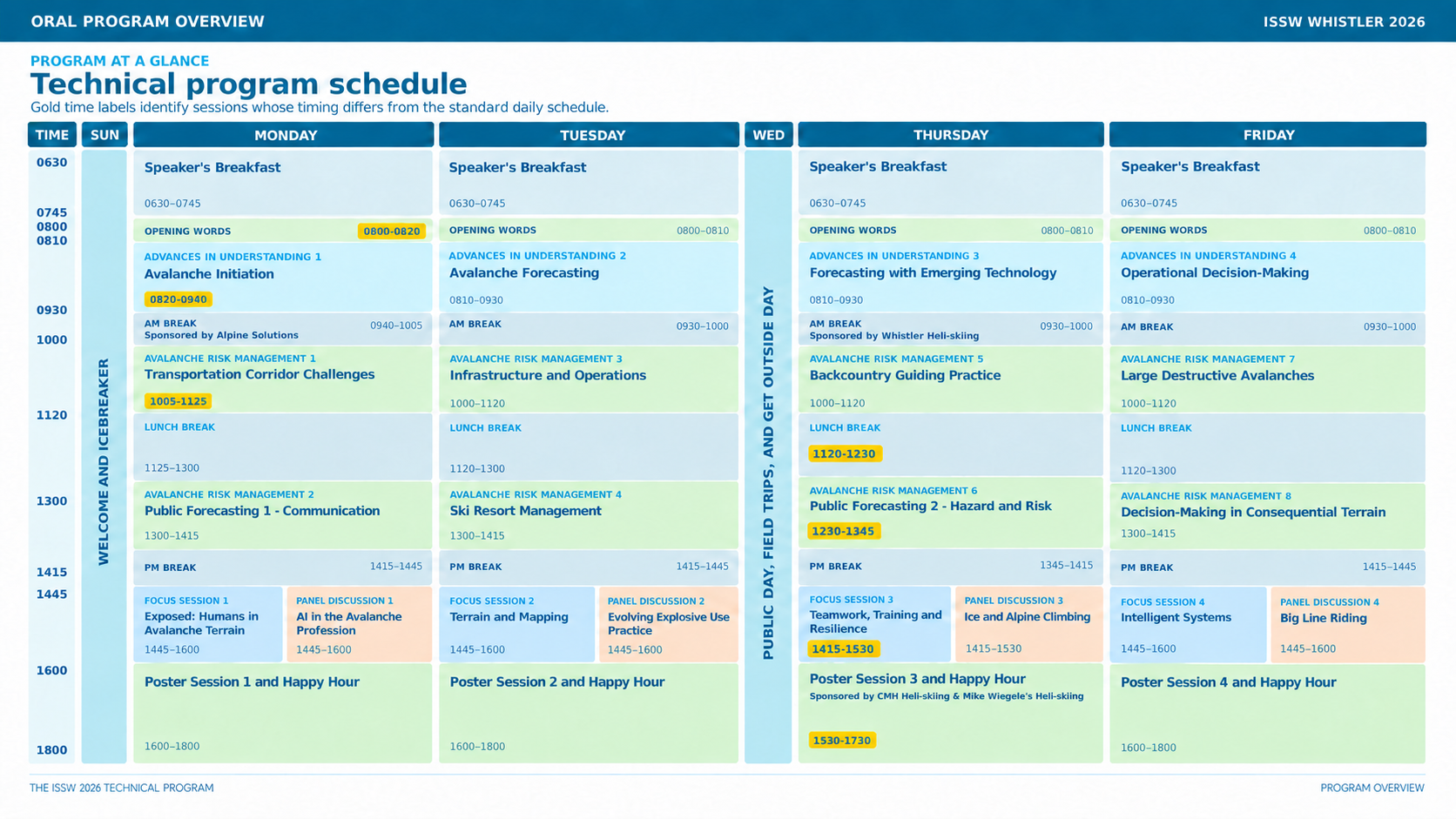
The oral presentation schedule for the week. Wednesday had field trips. You can see more detail on the ISSW2026 website.
I attended all the sessions as allowed by the schedule and looked at many of the posters. See my highlights below.
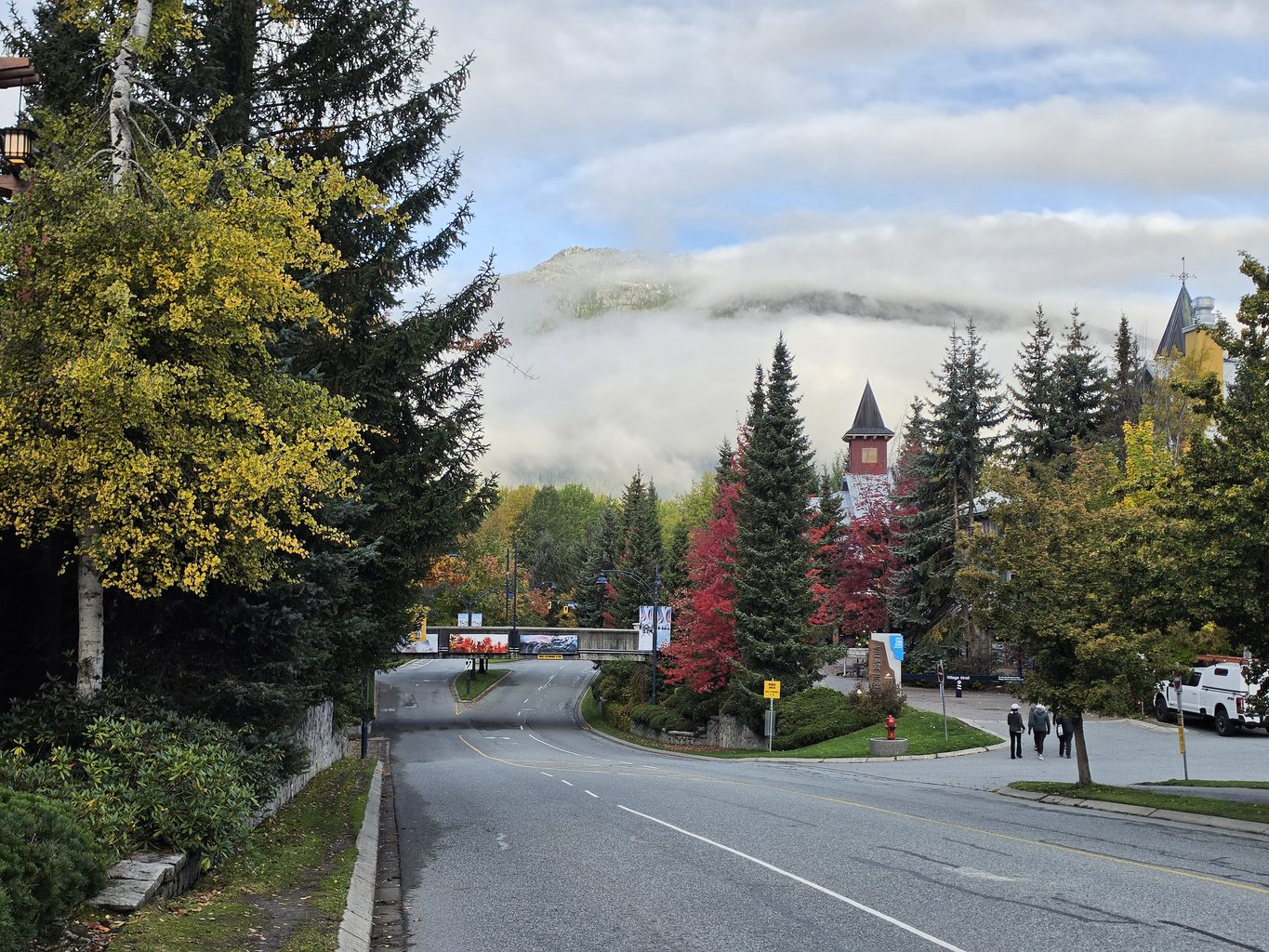
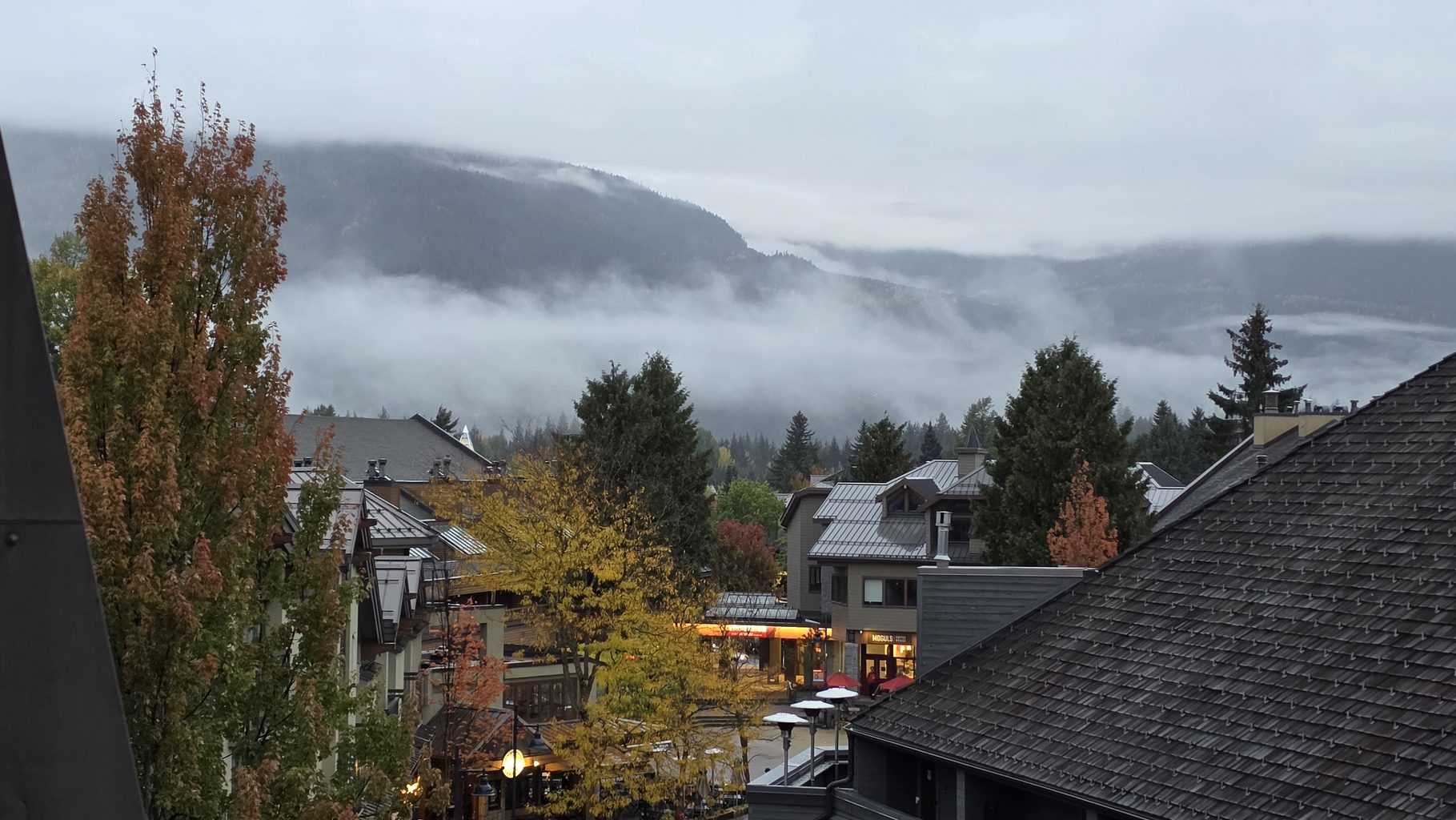
Whistler Village with fall colors and Whistler ski area in the distance.
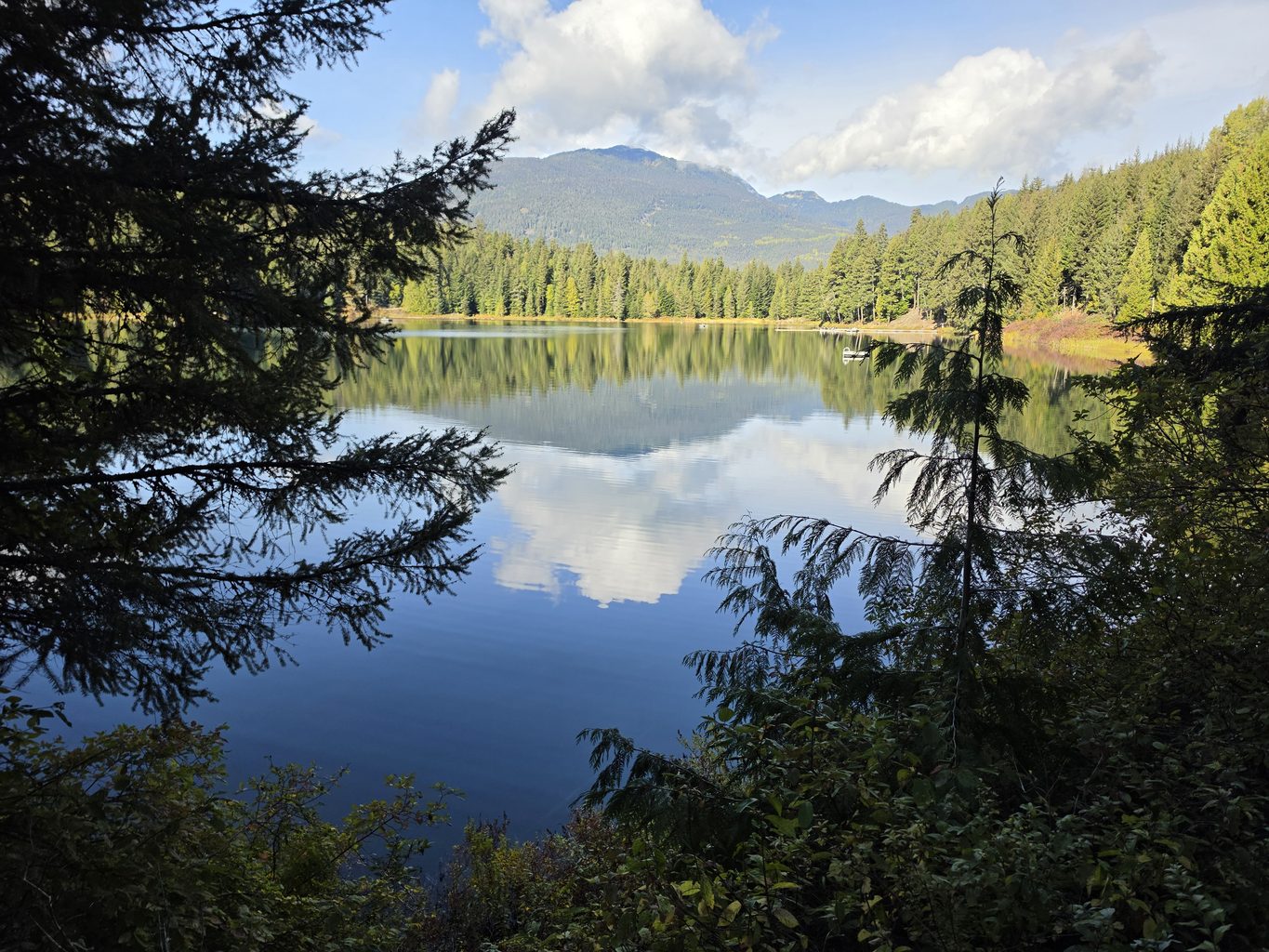
Lost Lake looking North of Blackcomb.
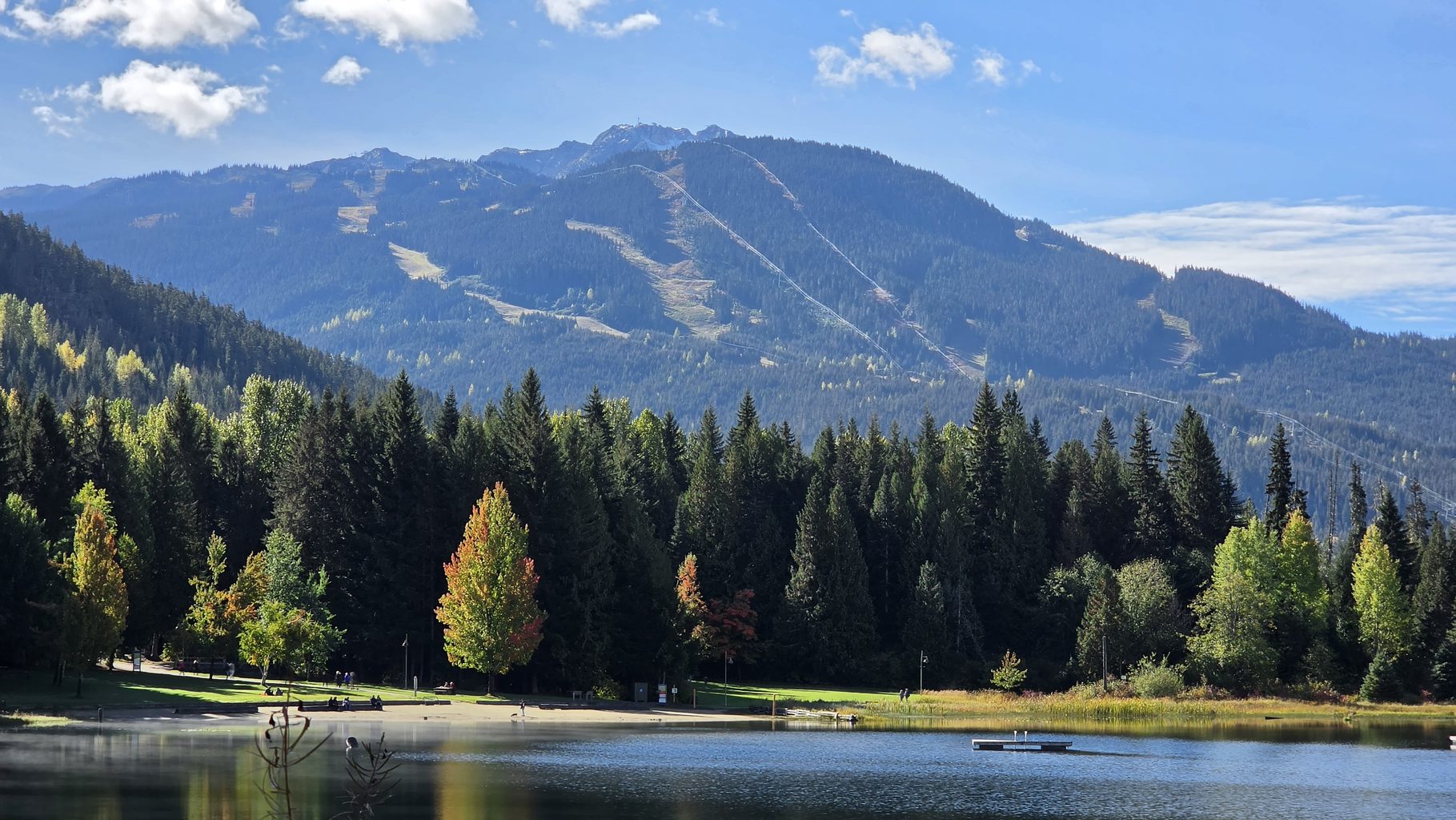
Blackcomb from Lost Lake
Other PNWD attendees included Brad Acker, Eric and Penelope Geisler, and Naomi Strauser. Naomi and Penelope did not attend the conference but were there to give support.
I also attended the “extra” Saturday AM session presented by CalTOPO.
References
Here is our division avalanche advisor’s report from Brad Acker. (video recording and editing by me:)
The ISSW proceedings hosted at Montana State University: https://arc.lib.montana.edu/snow-science
The complete list of the presentations. This is quite a detailed document that you may enjoy. This is the best way to understand the presentations. Pages 32-392 of this document is a summary list of all the presentations. They are marked in the upper-right of each page ORAL or POSTER. The ending material has nice “clickable” indexes of author and topic. Clickable titles for the workshop are on pages 24-31.
Some highlights and take-aways from my point of view.
You can find these in the complete list of presentations. A number refers to the abstract in this document. Here is a list of a few that made an impact on this observer.
Posters:
TO PROBE OR NOT TO PROBE: EVALUATING FINE SEARCH STANDARDS AND THE ROLE OF PROBING IN SHALLOW BURIAL PROFESSIONAL RESCUE SCENARIOS – no probe – just dig. 129
The History of HeliSkiing. 16
Lots of work using models (and AI). 24, 25, 26, 60, 195…
Using the DEID (Differential Emissivity Imaging Disdrometer – note that is does not say disco-meter, I wanted it to say disco-meter…) sensor – 42.
Remote sensing – 74, 120 (oral), 130, 205, 208, 212 (oral)…
(Poor) Decision Making – 114.
Wet slabs – 173, 223.
Whumpfing – 82.
Drones for forecasting – 200.
Counting Skiers using Bluetooth – 89.
Run List(s) – 167.
P.E.A.C.H.E.S. – 160. – (Pressure, Expectations, Arguments, Consequences, Heuristics, Everyone speaks, and Strategy)
Having the morning meeting – 169, 225.
Talking transceivers – 194.
Cause of Death – 91.
Sharing grief – 59.
Oral Presentations:
PWL – persistent week layers was a recurring topic. Some of the inter-mountain/continental areas develop a PWL in early season that can cause slope instability into March and April. 81, 171, 360, 390, 400, 407, 454.
Low-angle slides – Slopes have slide at angles below 20°. 434.
Glide-snow avalanches come from basically zero friction at the base layer and may take an hour to slide after the friction is released. 177 (poster), 188, 189.
The impact of (the increasing frequency of) Atmospheric Rivers. 54, 126 …
In avalanche photos try to put something of known height (a person) in the photo to help others gage size. 403.
Using drones for mitigation – 85.
A probe that takes temperature readings – 140.
Lots of work using models (and AI). 24, 26, 60, 213, 216, 217, 240…
For Ice Climbers – 115.
Drones for SAR – 99. – Several drone presentations – search “drone”
The Wilson Glade incident – 43.
The Alyeska large wet slab incident – 46.
When Jackson Hole lost power – 54.
Assessment for SAR teams – 64. 65.
Note that some oral presentations also included posters.
Note also that you can find links to the full papers on the MSU site. Just go to the MSU site and type in enough search terms to isolate the target article.
Summary
People from the whole world attended. Many locations have active avalanche paths that impact ski areas, backcountry travelers, and roads. Some of these are New Zealand, Norway, Sweden, Switzerland, and North America including Alaska, Cananda, and parts of the US.
Not only did you meet and hear from ski area and avalanche center people but also from highway “DOT” people.
The experience of hearing all the oral presentations and examining the posters in Whistler is too much to convey in an article. Please take time to look at the complete list of presentations and associated full articles on the Montana.edu site.
Again, thank you for your support of this ISSW and of avalanche education for the NSP and Santiam Pass.
223/247